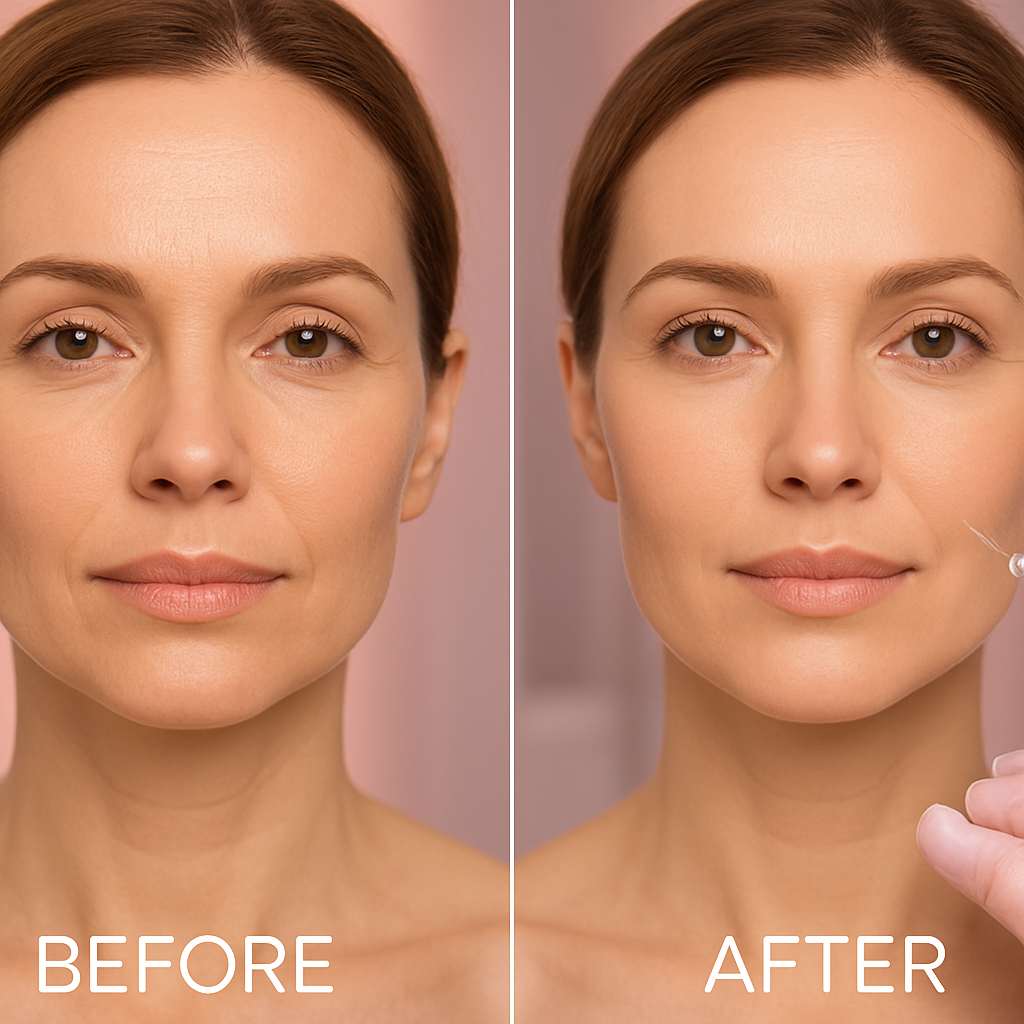
The rise in filler treatments has unfortunately led to an increase in patients needing filler correction in Cairo. Whether you received treatment elsewhere or simply want a fresh start, Magenta Clinique offers expert solutions for all types of filler problems.
Dr. Maggie Fawzi has extensive experience correcting poorly placed filler, from subtle asymmetries to severe overfilling. Using hyaluronidase enzyme and advanced techniques, we can dissolve unwanted filler and help you achieve the natural results you deserve. For those seeking new treatment after correction, our full-face harmonizing approach ensures balanced, beautiful outcomes.
When is Filler Correction Needed?
Signs You May Need Correction
If you are unhappy with previous filler treatment, you are not alone. Many patients seek correction after treatments at other clinics. Common reasons include results that look unnatural, visible lumps or bumps, filler that has moved from its original location, or simply wanting to return to a more natural appearance.
Important Note
Hyaluronidase only dissolves hyaluronic acid (HA) fillers like Juvederm, Restylane, and similar products. Non-HA fillers such as Sculptra (PLLA), Radiesse (calcium hydroxylapatite), or silicone cannot be dissolved and may require surgical intervention. If you are unsure what type of filler you have, we can help determine this during your consultation.
Common Filler Problems We Correct
Overfilling
Too much filler creating an unnatural, puffy, or heavy appearance
Examples: Duck lips, pillow face, over-projected cheeks
Migration
Filler that has moved from its original placement location
Examples: Lip filler above the vermillion border, under-eye filler moving to cheeks
Lumps & Nodules
Visible or palpable irregularities in the treated area
Examples: Bumps in lips, irregular jawline contour, visible nodules
Asymmetry
Uneven results creating imbalanced facial appearance
Examples: Uneven lips, asymmetrical cheeks, crooked smile
These problems can occur for various reasons improper injection technique, wrong filler type for the area, too much volume, or the natural process of filler settling over time. Regardless of the cause, correction is possible in most cases involving HA fillers.
How Hyaluronidase Dissolving Works
The Science Behind Filler Dissolving
Hyaluronidase is a naturally occurring enzyme in the body that breaks down hyaluronic acid. When injected into areas with HA filler, it rapidly breaks the bonds that hold the filler gel together, allowing your body to naturally absorb and eliminate the material.
- Fast-acting: Begins working within minutes of injection
- Controllable: Amount used can be adjusted for partial or complete dissolution
- Safe: FDA-approved with decades of clinical use
- Reversible effects: Your natural HA recovers within days
According to studies published in the Journal of Clinical and Aesthetic Dermatology, hyaluronidase is highly effective for dissolving HA fillers with a strong safety profile when administered by trained professionals.
The Filler Correction Process at Magenta Clinique
Assessment & History
We discuss your treatment history, identify the filler type if possible, assess the areas of concern, and determine your goals whether complete removal or targeted correction.
Skin Testing (When Indicated)
For patients with allergy concerns or those who have never had hyaluronidase, we may perform a small skin test to check for reactions before proceeding.
Strategic Injection
Hyaluronidase is injected precisely into the areas of unwanted filler. We may use ultrasound guidance for deep filler or complex cases to ensure accurate placement.
Follow-Up & Assessment
We schedule a follow-up within 1-2 weeks to assess results. Some cases require additional sessions. Once correction is complete, we can discuss new treatment options if desired.
Types of Correction Approaches
Complete Dissolution
Removing all filler to start fresh or return to natural state
Best for: Severe overfilling, wrong filler type for the area, or patient preference to return to natural look
Partial Correction
Dissolving specific areas while preserving satisfactory results
Best for: Migration in one area, localized lumps, or minor asymmetry correction
Staged Correction
Multiple sessions for gradual, controlled reduction
Best for: Complex cases with large volumes of filler, or when preserving some volume is desired
What to Expect: Recovery & Results
Immediate Aftercare
- Initial swelling may make area look larger briefly
- Dissolution begins immediately and continues 24-48 hours
- Possible bruising similar to filler treatment
- Avoid exercise and heat for 24 hours
Timeline to Results
- 24-48 hours: Initial results visible
- 1 week: Swelling resolves, true results apparent
- 2 weeks: Follow-up appointment for assessment
- 2-4 weeks: New filler can be placed if desired
Preventing Future Filler Problems
Tips for Successful Future Treatment
- Choose experienced injectors: Board-certified specialists with training in anatomical mapping
- Start conservatively: You can always add more, but overfilling requires correction
- Understand the plan: Ask about filler type, amount, and placement before treatment
- Allow proper intervals: Wait for swelling to resolve before judging results
- Consider comprehensive approach: Our full-face harmonizing creates balanced, natural results
Frequently Asked Questions About Filler Correction
Will I look worse before I look better?
Initial swelling from the injection may temporarily make the area look fuller. This subsides within 24-48 hours as the filler dissolves. Most patients see significant improvement by day 3-5.
Can you dissolve just part of my filler?
Yes, we can target specific areas while preserving satisfactory results elsewhere. This requires precise technique and may need staged treatments for optimal control.
I had filler years ago will it still dissolve?
While HA fillers typically last 6-18 months, some product can remain longer than expected. Hyaluronidase will dissolve any remaining HA filler regardless of age. Very old filler may require less enzyme.
What if I do not know what type of filler I have?
We can often determine filler type through assessment. If HA filler is suspected, we can try a test area with hyaluronidase. If there is no response, the filler is likely non-HA and other options would be discussed.
Ready to Fix Your Filler Problems?
Book a consultation with Dr. Maggie Fawzi at Magenta Clinique. We will assess your situation and create a personalized correction plan to restore your natural appearance.
Magenta Clinique, Maadi, Cairo