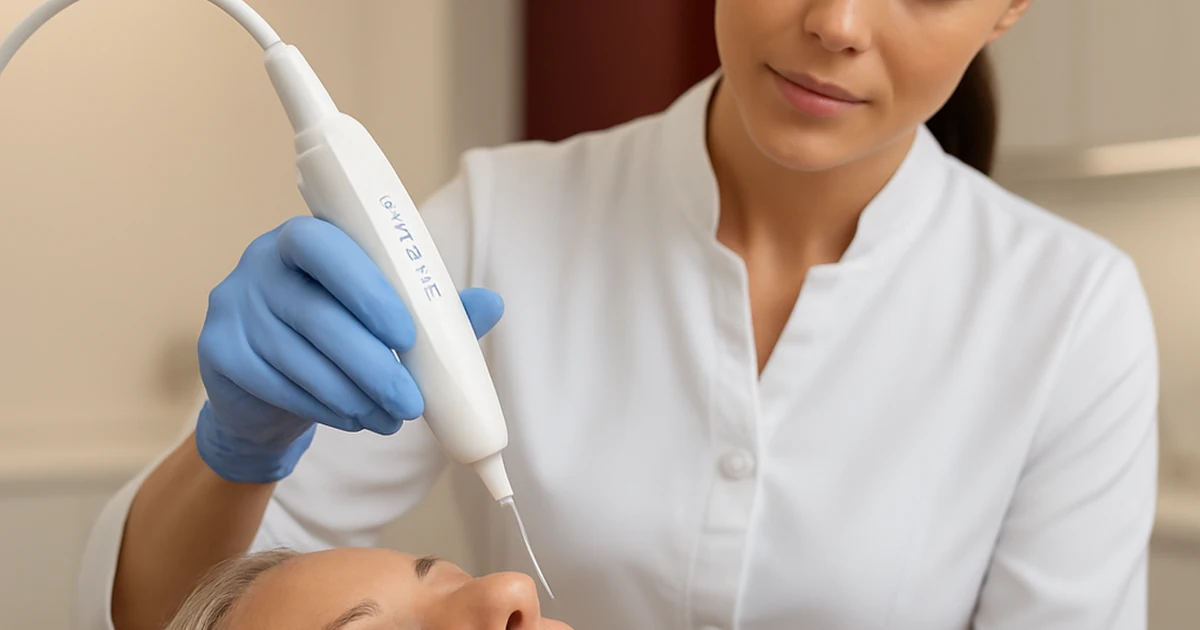
Face-tightening comparison
Endolift vs HIFU in Egypt: A Face-Tightening Comparison
Compare the actual procedures, expected scope of improvement and quality of evidence before committing to an expensive treatment package.
Endolift vs HIFU is a comparison between two very different approaches to facial tightening. Endolift uses a thin optical fiber introduced beneath the skin to deliver laser energy, while HIFU delivers focused ultrasound through the skin without inserting a fiber. Neither technology is an automatic alternative to a surgical facelift. The better discussion starts with your anatomy, the degree of laxity, whether a local fat pocket contributes to your concern and your tolerance for procedural risk.
Key takeaways
- Endolift is a fiber-based, minimally invasive subdermal laser technique; HIFU is an externally applied focused-ultrasound treatment.
- The procedures differ in tissue access, potential downtime, treatment targets and risk profile, not just price.
- Research on both methods has limitations. Reviews of Endolift evidence reach different conclusions about how confidently it can be recommended.
- An examination should distinguish genuine loose skin from volume loss, muscle activity and localized fat before a device is chosen.
- When laxity is substantial, a surgical consultation may be more honest than repeated energy-based sessions.
Article contents
What Is the Difference Between Endolift and HIFU?
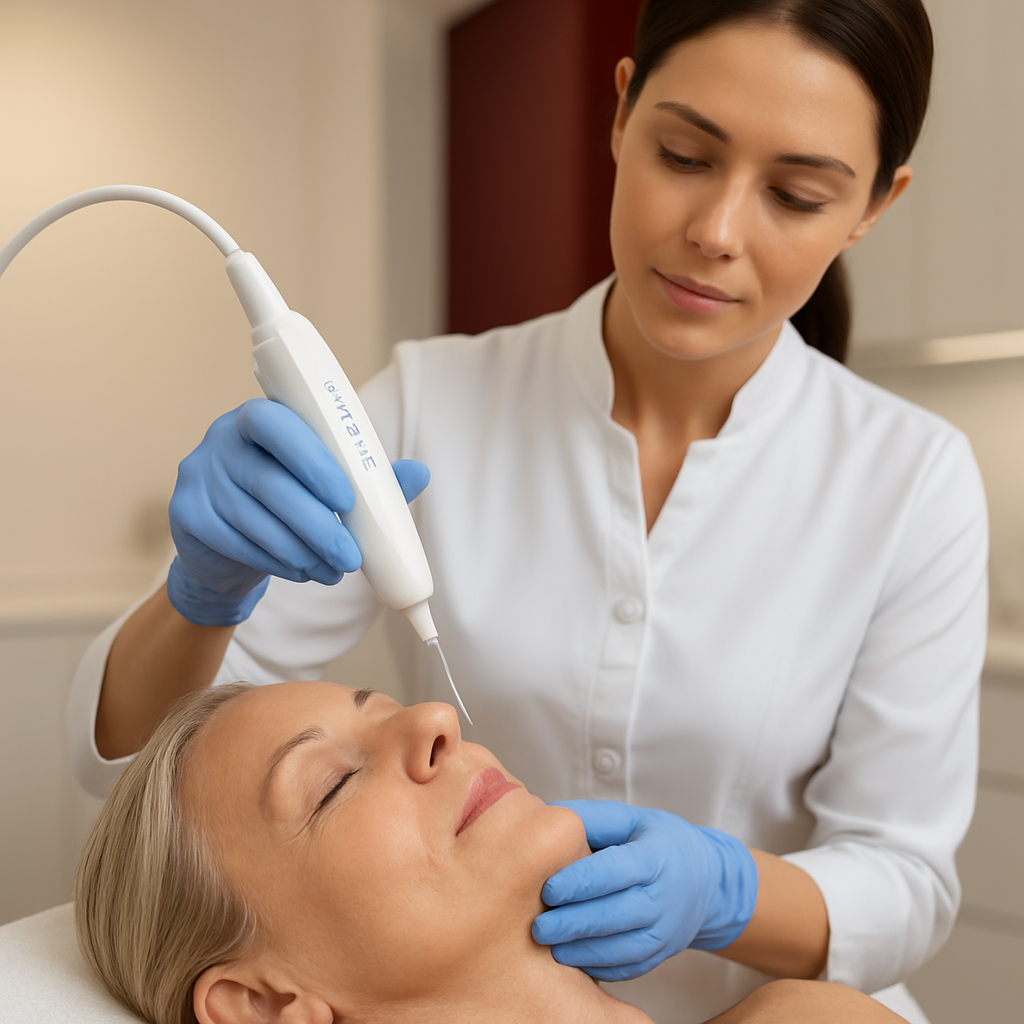
Endolift is a subdermal laser procedure. A clinician inserts a fine fiber through a small skin entry point and delivers laser energy below the surface. Treatment plans vary and may be intended to address selected mild-to-moderate laxity and localized contour concerns. The approach is not the same as a noninvasive surface laser, because treatment occurs beneath the skin.
High-intensity focused ultrasound, often abbreviated HIFU, focuses acoustic energy at planned tissue depths without inserting a fiber. Different HIFU platforms and cartridges work at different levels. Some are designed to address signs of mild or moderate laxity. It is a noninvasive procedure, but it still delivers energy into tissue and can cause injury when poorly planned.
The most important distinction is not which machine looks more advanced. It is whether the clinical goal justifies subdermal fiber access or is more appropriately approached with noninvasive focused ultrasound. The treatment area, prior procedures and clinician expertise all matter.
Endolift vs HIFU: The Decision Table
There is no sound basis for saying one is categorically safer, more effective or longer-lasting for everyone. The appropriate comparison is made against an individual diagnosis and the specific platform, setting and operator being considered.
| Question | Endolift | HIFU |
|---|---|---|
| Delivery | Laser energy delivered through a fiber placed beneath the skin. | Focused ultrasound energy delivered from outside the skin. |
| Invasiveness | Minimally invasive; involves a skin entry point and subdermal work. | Noninvasive energy-based procedure; no fiber entry. |
| Reason to consider | Selected localized contour and laxity concerns after examination. | Selected mild-to-moderate laxity when noninvasive treatment is preferred. |
| Recovery planning | May involve swelling, bruising or tenderness and procedural aftercare. | Often less visible recovery, but tenderness, swelling or other reactions can occur. |
| Important risks | Burns, nerve or vessel injury, infection, asymmetry or contour problems are possible. | Burns, nerve-related problems, discomfort or unwanted tissue effects can occur. |
| Evidence question | Which Endolift indication is supported for this patient and device? | Which ultrasound device and treatment protocol have evidence for this indication? |
Which Might Fit Jowls, Lower Face or a Double Chin?
A full-looking lower face may result from jaw muscle size, superficial or deep fat, the natural bone structure, age-related volume shifts, skin looseness or some combination. Calling every lower-face concern sagging can lead to the wrong procedure. The examination should identify what is actually causing the contour before recommending energy delivery.
In a carefully selected person with localized contour concerns, a clinician may discuss a subdermal approach such as Endolift. Someone with mild laxity who strongly prefers to avoid fiber insertion may want to discuss noninvasive ultrasound. Neither statement guarantees a satisfactory response; skin quality, medical factors and anatomical differences affect the decision.
If significant loose skin needs repositioning, a surgical face or neck consultation may be the more appropriate choice. If the issue is mainly volume loss, removing or heating tissue may be counterproductive. A clinician should also explain when doing nothing is reasonable.
What Does the Published Evidence Actually Say?
The evidence needs nuance. A 2024 systematic review of subdermal 1470 nm Endolift reports promising results across aesthetic indications but says larger, controlled trials are required. A separate 2025 systematic review is substantially more cautious: it highlights small, heterogeneous studies, high risk of bias and inconsistent treatment protocols and concludes that strong claims about Endolift efficacy and safety remain difficult to justify.
For HIFU, a 2025 systematic review covering a range of clinical studies reports improvement in selected facial and body tightening outcomes. The authors also note that standardization and long-term evidence remain challenges. Those findings do not mean all HIFU machines, energy settings and patients will perform similarly.
There is no credible reason to convert findings from different groups, anatomical areas and devices into a universal statement that Endolift is twice as strong or HIFU lasts exactly a certain number of years. Ask the clinic about the studies most applicable to your anatomy, the exact device and the outcome being promised.
Pain, Downtime and Safety Considerations
Endolift involves an entry point and subdermal work, so swelling, bruising, tenderness and other healing needs may be more relevant to planning than with a typical noninvasive HIFU appointment. However, experience differs with treatment area, anesthesia, parameters and health history. No provider should promise a universal recovery period without discussing the actual procedure.
HIFU avoids fiber insertion but can still cause discomfort and may carry thermal or nerve-related risks. Do not treat noninvasive as meaning risk-free. The person selecting treatment depths must understand facial anatomy, particularly near nerves and areas with less protective tissue.
Whichever option is discussed, disclose previous fillers, threads, energy treatments, surgery, scarring, medications and medical conditions. Ask for the consent form, the operator's qualifications and the plan for unexpected numbness, severe pain, infection or contour change.
- Confirm the exact name and model of the device to be used.
- Ask which part of your face is targeted and which tissue layer is intended.
- Discuss whether the proposed result is tightening, fat reduction, contour change or a combination.
- Ask what recovery is realistic before work, travel or a social event.
- Understand the possible consequences if the procedure produces less benefit than expected.
Comparing Treatment Quotes in Egypt
Endolift vs HIFU cost comparisons often fail because the quotes may describe completely different treatment areas or visits. A quoted single HIFU session may not cover the same anatomy, operator time, follow-up or outcome as a subdermal Endolift appointment. Neither price should be judged without a written treatment plan.
The user-supplied Magenta Clinique files did not include a verified current fee for these procedures. Publishing a numeric price would therefore be misleading. Request the current fee, how it is calculated, whether the treatment plan includes follow-up, and which additional costs would arise if more sessions or a different procedure are recommended.
If a clinic offers a discount for booking immediately, ask to take time to consider the benefits, alternatives and potential complications. Treatment involving thermal energy should not be chosen under pressure from a time-limited advertisement.
What If Neither Endolift Nor HIFU Is the Right Choice?
A high-quality aesthetic consultation should make room for a third answer: neither. Facial volume loss may call for a different approach than tightening. Fine texture and pores may be better suited to skin-quality treatments. More pronounced laxity may deserve surgical evaluation. This is how treatment stays connected to the patient rather than the available device.
Magenta Clinique already publishes an independent comparison of Fotona 4D and HIFU. That guide owns the laser-facial-rejuvenation-versus-ultrasound question. This Endolift page instead stays focused on the distinction between a minimally invasive subdermal laser and HIFU.
If your concern is predominantly acne scars or uneven texture rather than lower-face contour, ask whether an RF microneedling or fractional laser consultation would be more relevant.
A Practical Consultation Checklist
Describe the exact result you hope to see, preferably pointing to a particular area rather than requesting a device by name. Ask the clinician to show you the anatomical reason for the recommendation. A well-informed patient should leave knowing what improvement is plausible, what will not improve, what could go wrong and when results will be reviewed.
- 1
Identify the actual concern
Is it skin looseness, localized fat, loss of facial volume, muscle bulk or a combination?
- 2
Compare medical suitability
Discuss prior treatments, facial anatomy, contraindications and alternative options.
- 3
Inspect the evidence
Ask which published evidence applies to the specific platform and indication.
- 4
Request a complete quote
Get treatment area, expected session plan, aftercare and follow-up details in writing.
- 5
Agree on a realistic review date
Ask how the clinician will assess improvement and what happens if the result is modest.
Frequently asked questions
Is Endolift better than HIFU for jowls?
Neither is universally better. Endolift uses a fiber beneath the skin and may be discussed for selected contour or laxity concerns; HIFU delivers energy noninvasively and may suit selected mild-to-moderate laxity. Jowls can reflect loose skin, fat, muscle or volume changes. Your anatomy and the specific device matter more than the treatment name.
Which has less downtime, Endolift or HIFU?
HIFU is noninvasive, so it often involves less visible recovery than a subdermal fiber procedure, but both may produce discomfort and swelling. Endolift can involve bruising and other procedural recovery considerations. The exact recovery depends on the platform, technique, treated area and individual response; ask for a tailored plan.
Does Endolift replace a surgical facelift?
No. Endolift is not a substitute for the tissue repositioning possible with surgery, especially when excess skin or structural descent is substantial. For significant laxity, discuss a surgical evaluation rather than expecting repeated energy-based sessions to produce equivalent results.
Is Endolift proven to last longer than HIFU?
The current literature does not support a universal claim that one lasts longer for every face. Studies involve different devices, settings and patient groups, and reviews of Endolift evidence have noted important limitations. Ask about realistic follow-up, durability uncertainty and which individual outcome is being measured.
How much does Endolift vs HIFU cost in Cairo?
Current cost depends on the procedure, the area, device, clinician and what is included. The supplied site files did not verify a current Magenta Clinique fee for a like-for-like comparison, so this guide does not publish one. Request a dated written quote for the actual proposed treatment plan.
Sources & evidence
The clinical information below uses published guidance and literature. Evidence strength varies by device and indication; these references do not replace an individual medical assessment.
Discuss the Right Tightening Approach for Your Face
Ask Magenta Clinique for an individual assessment. The goal is a safe, evidence-aware decision, including the option not to have a procedure.
Ask Magenta CliniqueContinue with a focused guide
Published 2026-10-08. Prepared by the Magenta Clinique Editorial Team for patient education. This information is not a diagnosis or a treatment recommendation; your clinician's personalized instructions take priority.