
Jaw treatment recovery
Masseter Botox Aftercare: Chewing, Jaw Changes and When to Call
A useful guide for the questions that begin after an injection, not another general jaw-slimming sales pitch.
After masseter Botox, it is normal to ask whether you can eat, when the jaw will look different, and whether a strange feeling while chewing matters. This guide answers the recovery questions patients commonly raise. If you are still deciding whether injections suit your anatomy or clenching concerns, explore Magenta Clinique's masseter treatment guides for Maadi and New Cairo.
Key takeaways
- Jaw function and facial shape are separate treatment goals; improvement in one does not guarantee improvement in the other.
- Do not massage or press injection sites, and follow your injector's specific aftercare guidance.
- Aesthetic slimming is gradual and cannot be judged from the next-day mirror.
- Chewing weakness, a changed smile or uneven bulging deserve a follow-up, not another injection without assessment.
- Botulinum toxin is not a substitute for investigating dental, sleep or jaw-joint causes of bruxism.
Article contents
First: Know What Was Actually Treated
The masseter is the thick chewing muscle at the side of the jaw. Botulinum toxin temporarily reduces muscle activity at the injection site. A person with a noticeably enlarged masseter may ultimately see less muscular width; someone seeking pain relief from clenching may be looking for a different outcome entirely.
Not every broad jawline is caused by muscle. Bone shape, fat distribution and skin laxity can all influence facial width. That is why follow-up should compare the original treatment goal, not a promise that all faces become more V-shaped. The evidence for treating bruxism and temporomandibular problems is also mixed, and dentistry or jaw-joint assessment may be required.
Immediately After Injection: Leave the Treated Area Alone
Mild tenderness or a small bruise at an injection point can occur. You do not need to repeatedly press on the jaw to check whether the medicine has worked. The American Academy of Dermatology recommends avoiding rubbing and massaging areas injected with botulinum toxin.
Follow your injector's specific advice on exercise, makeup, other facial treatments and pain relief. If you use a night guard, have orthodontic treatment or take medicines that may affect the response, discuss these with the clinician rather than silently changing your routine.
- Do not massage, press or repeatedly test the injection sites.
- Keep the written post-procedure instructions and contact number.
- Note any tenderness or bruising; call if symptoms are severe or are getting worse.
- Ask before arranging massage, dental procedures or other facial treatments close to the injection date.
Recovery Timeline: What to Track Instead of Constantly Checking the Mirror
Botulinum toxin does not instantly shrink a chewing muscle. A change in muscle activity can begin earlier than an obvious change in facial contour, and the pace differs by dose, anatomy and individual response. The table below is a monitoring framework rather than a promise that every patient changes on a set date.
| When | What to look for | When to contact the clinic |
|---|---|---|
| First 24-48 hours | Small injection-site marks or mild tenderness can occur. | Severe pain, rapidly increasing swelling or any worrying systemic symptom. |
| Following 1-2 weeks | The treated muscle may start feeling different during chewing; visible slimming may still be subtle. | Trouble chewing ordinary meals, a changed smile or unexpected weakness. |
| Later weeks | Muscle size and lower-face contour may change gradually if muscle bulk was contributing to width. | Unwanted asymmetry, persistent unusual bulging, functional problems or concern about the result. |
| Planned review | Discuss response, function and whether treatment goals were realistic. | Do not request an automatic top-up without a reassessment. |
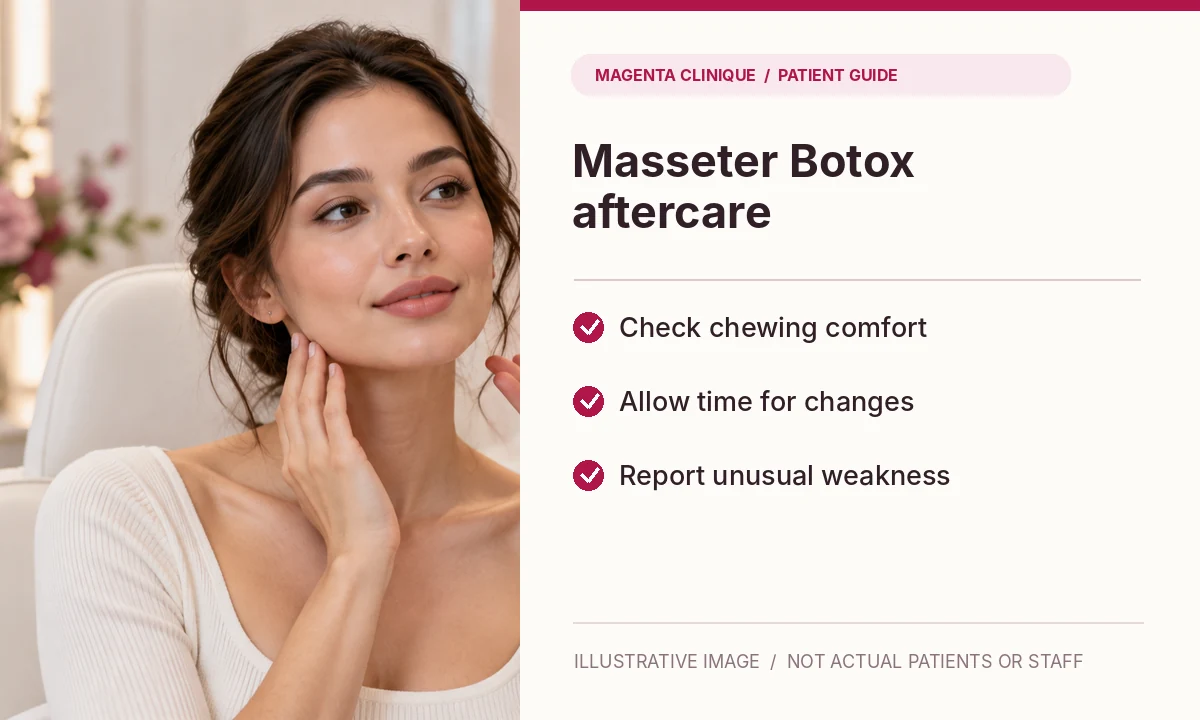
Can I Eat Normally? Chewing Is a Safety Question, Not Just a Cosmetic Detail
Because the masseter helps close the jaw, reducing its activity may change how strongly or comfortably you chew, particularly harder foods. Mild awareness of the muscle is different from an inability to chew properly. If ordinary eating becomes difficult, stop experimenting with exercises or massage and contact the clinician.
The medical literature describes unwanted effects such as reduced chewing strength, asymmetry of facial expression and localized muscle bulging in some patients. These are reasons for careful anatomy-based technique and honest informed consent. No responsible article should promise “zero side effects.”
If the primary complaint is sleep grinding, a medical and dental assessment still matters. Botulinum toxin may reduce muscle activity in selected cases, but it does not independently diagnose the reason for bruxism or replace other management strategies.
How to Compare Changes Without Misreading the Result
If you and your clinician agreed to follow contour changes, take optional photographs under similar lighting, camera distance and facial expression. Do not compare a relaxed face one day with a clenched jaw on another. Swelling and angle differences can create misleading “before and after” results.
At review, ask three separate questions: Did jaw discomfort change? Is chewing comfortable? Did the lower face change in the direction you wanted? The answers can be different. If you dislike a change in your smile or contour, discuss it before considering other injections or fillers.
- 1
Recall your starting goal
Was the main issue muscle bulk, clenching, jaw discomfort or more than one concern?
- 2
Check day-to-day function
Can you eat normally? Has pain, jaw tension or tooth grinding actually changed?
- 3
Review in consistent conditions
Use the same photo angle if you document a contour change; do not judge by a single selfie.
- 4
Ask what happens next
If benefit is unclear or side effects occur, request reassessment rather than assuming a bigger dose is needed.
Which Symptoms Need Assessment?
Most people focus on when their face will look slimmer. It is equally important to know the symptoms that change the plan. Unexpected smile asymmetry, significant change in chewing strength, worsening jaw pain or a new focal bulge should be reviewed by the injector. The timing and severity of symptoms matter.
The exact product, dose, injection map and regulatory status of treatment for a particular purpose should be discussed with your clinician. International approval information is not a statement of approval for every use or product in Egypt.
- Ask for the injection details and agreed follow-up date.
- Contact your clinic about worsening pain, loss of normal chewing function, asymmetry or new bulging.
- Seek urgent care for difficulty swallowing, breathing or speaking, or widespread weakness.
- Have persistent grinding or jaw-joint pain assessed rather than assuming cosmetic Botox addresses every cause.
Frequently asked questions
When will masseter Botox start changing my jawline?
Changes in muscle activity may precede visible slimming. Contour change, when it occurs, is gradual and varies by anatomy and treatment plan; your injector should set a realistic review date.
Is it normal for chewing to feel different?
The masseter helps chew, so treatment can affect muscle strength. Mild awareness is not the same as marked chewing difficulty. Contact the clinician if regular eating becomes difficult.
Should I massage my jaw after masseter Botox?
Do not massage or press injection sites unless the treating clinician specifically advises it. The American Academy of Dermatology advises avoiding rubbing and massage after botulinum toxin injections.
Will masseter Botox cure teeth grinding?
It should not be described as a guaranteed cure. Evidence for bruxism outcomes varies, and dental or medical assessment may still be necessary.
Sources & evidence
The clinical information below uses published guidance and literature. Evidence strength varies by device and indication; these references do not replace an individual medical assessment.
Have a Question About Your Jaw or Your Treatment?
Ask for a suitable consultation or follow-up. Explain whether your concern is chewing, clenching or facial contour so the right assessment can be arranged.
Ask Magenta CliniqueView New Cairo ClinicContinue with a focused guide
Masseter Botox: New Cairo patient decision guide
Explore this topic Related readingMasseter Botox: Maadi treatment overview
Explore this topic Related readingBotox safety, allergies and treatment myths
Explore this topic Related readingNew Cairo clinic consultation options
Explore this topicPublished 2026-10-17. Prepared by the Magenta Clinique Editorial Team for patient education. This information is not a diagnosis or a treatment recommendation; your clinician's personalized instructions take priority.